 “Flat Roof Choice” Is Really an Asset-Protection Decision
If you manage or own a commercial building in Southern California, your roof isn’t just keeping water out—it’s protecting:
- tenant buildouts,
- inventory,
- equipment,
- and business continuity.
And with California’s cool-roof requirements continuing to shape reroofing decisions, roof selection is also tied to energy performance and compliance. Cool Roof Rating Council+1
The big question we hear is:
“Should we do TPO, PVC, or modified bitumen?”
Here’s a practical, non-salesy breakdown.
Quick Definitions
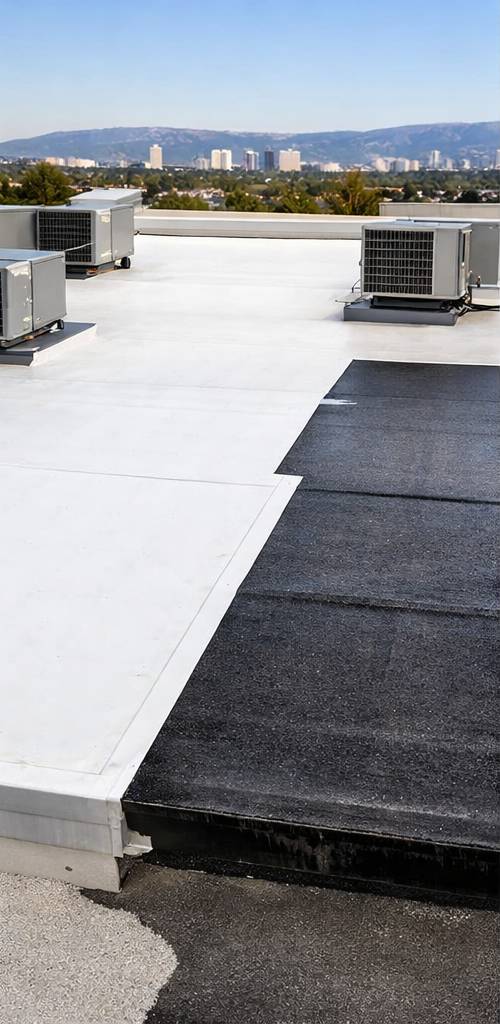
- TPO (Thermoplastic Polyolefin): White reflective single-ply membrane, heat-welded seams.
- PVC (Polyvinyl Chloride): Another heat-welded single-ply membrane, long track record; often chosen for chemical resistance.
- Modified Bitumen (Mod-Bit): Asphalt-based multi-layer system (commonly torch/heat welded or self-adhered), known for toughness.
The “SoCal Factors” That Matter Most
1) Heat + UV exposure
Southern California roofs take a beating—especially in inland valleys where rooftop temps spike for long stretches.
Reflective membranes (TPO/PVC) are commonly selected for heat performance and cool-roof compliance, but not all products are equal—ratings and proper installation matter. Cool Roof Rating Council
2) Rooftop foot traffic and equipment
If your roof has:
- HVAC units that get serviced monthly,
- grease vents (restaurants),
- telecom equipment,
- solar,
- or frequent maintenance traffic…
…you should choose a system and protection plan that fits reality (walk pads, sacrificial layers, service paths).
3) Ponding water risk
Any flat roof with poor drainage is higher risk. Material choice helps, but design + drain maintenance are what actually prevent leaks.
TPO: Great Value—When It’s Detailed Correctly
Best for: many offices, warehouses, retail buildings that want a reflective roof at a strong price point.
Why people choose it:
- typically cost-effective
- reflective options for cool-roof compliance
- heat-welded seams
Watch-outs:
- installation quality matters a lot (edge terminations, penetrations, details)
- roofs with heavy chemical exposure may be better served by other options
PVC: Often the Go-To for Chemical Exposure & Longevity Mindset
Best for: restaurants/food service, certain industrial uses, and owners prioritizing a long track record.
PVC has been used for decades longer than TPO in commercial roofing history. Many building owners consider PVC when grease/chemicals are a concern or when they want a system widely viewed as “battle-tested.”
Modified Bitumen: Tough, Repairable, and Often Great for High-Traffic Roofs
Best for: buildings with lots of rooftop access, complex detailing, or owners who prefer a multi-layer approach.
Why owners like it:
- puncture resistance (great for “busy roofs”)
- layered redundancy
- repairs can be very straightforward when maintained
Watch-outs:
- reflectivity depends on surfacing (cap sheet type/coating strategy)
- install method matters (torch work requires experience and jobsite controls)
Don’t Forget the 2026 Compliance Reality: Cool Roof Ratings
For many reroof projects—especially low-slope roofs—California’s energy standards continue to require cool-roof performance, and products used for compliance typically must be properly rated/listed (commonly via CRRC). Cool Roof Rating Council+1. That doesn’t mean you can’t choose the system you want—but it does mean you should select materials with compliance in mind from day one.
A Simple Decision Framework We Use with Property Managers
When we’re helping clients choose, we ask:
- What’s on the roof (HVAC/grease vents/solar/traffic)?
- What’s the drainage situation?
- What failure risk is unacceptable (tenants, inventory, downtime)?
- Do you want lowest upfront cost—or lowest lifecycle cost?
- What does compliance require for this building type and location?
Want a Recommendation Based on Your Building?
Rocket Roofing serves commercial properties across Southern California. If you want a clear recommendation (not guesswork), we can inspect the roof, review your building needs, and propose options with an honest pros/cons breakdown.
Owens Corning Roofing Products
Owens Corning Roofing Products
Rocket Roofing is proud to be selected as an Owen’s Corning Approved Roofing Contractor.
Owens Corning is a leader in roofing shingles, underlayment and components products. The look of a roof can have a significant impact on the overall design and perceived value of a home. After all, the roof can make up half of a home’s exterior.
Owens Corning systems look better, last longer and offer more choices to perfectly fit your project.
Rocket Roofing is proud to be selected as an Owen’s Corning Approved Roofing Contractor.
Owens Corning is a leader in roofing shingles, underlayment and components products. The look of a roof can have a significant impact on the overall design and perceived value of a home. After all, the roof can make up half of a home’s exterior.
Owens Corning systems look better, last longer and offer more choices to perfectly fit your project.