Roof Tear-Off vs. Roof-Overlay: What Southern California Homeowners Should Know
When homeowners begin collecting roof replacement estimates, they may discover that not every contractor is proposing the same type of project.
One estimate may include removing the existing roofing materials down to the wood roof deck. Another may recommend installing new shingles over the existing roof. The second option—often called a roof-over, overlay or reroof—can initially appear faster and less expensive.
However, the lowest upfront price does not always provide the best long-term value.
Understanding the difference between a complete tear-off and a roof overlay can help you compare roofing proposals more accurately and avoid problems hidden beneath the surface.
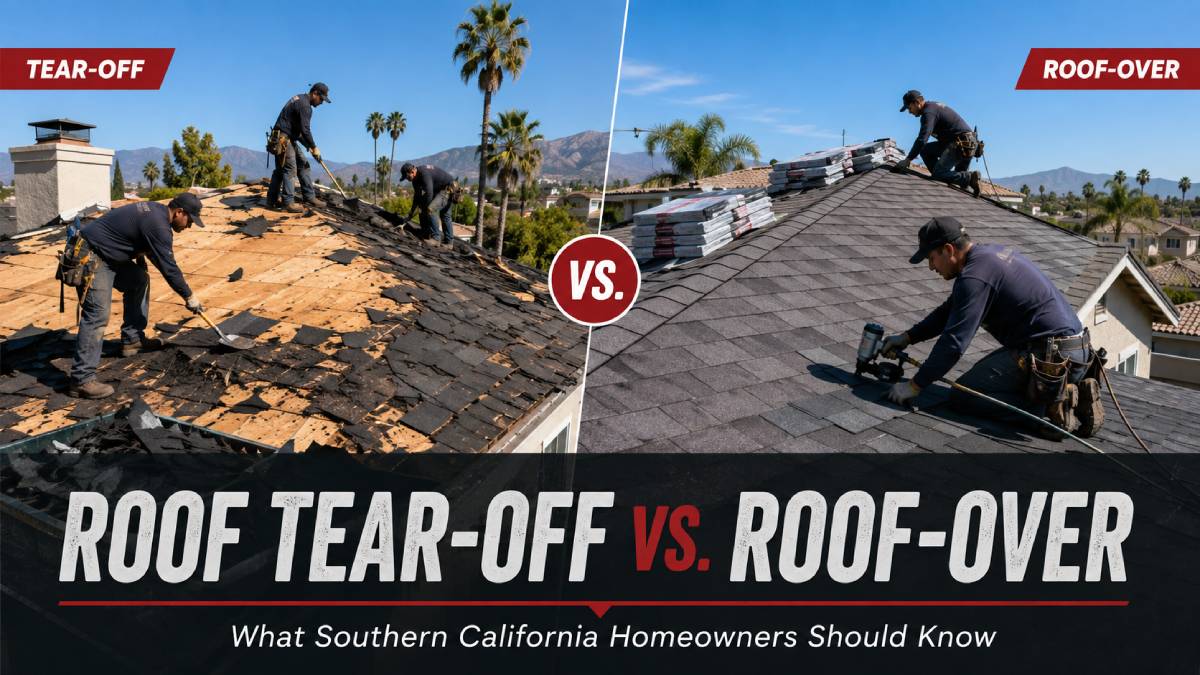
What Is a Complete Roof Tear-Off?
A complete tear-off involves removing the existing shingles, underlayment, nails and related roofing materials until the structural roof deck is exposed.
Once the old system has been removed, the roofing contractor can inspect the wood decking for:
- Water damage
- Dry rot
- Delamination
- Soft or weakened areas
- Improper repairs
- Loose or deteriorated fasteners
- Gaps or uneven sections
- Damage around vents, chimneys and skylights
Any compromised decking can then be repaired or replaced before the new roofing system is installed.
Roofing manufacturers generally require underlayment and other components to be installed over a structurally sound, smooth, clean and dry roof deck. Manufacturer instructions may also call for water-damaged sheathing to be replaced before installation. (Owens Corning)
What Is a Roof Overlay?
A roof overlay involves installing new roofing materials directly over an existing layer of shingles.
Because the contractor does not have to remove and dispose of the old roofing system, an overlay may reduce labor, disposal costs and the amount of time the home is exposed during construction.
An overlay may be considered when:
- There is only one existing roofing layer
- The current shingles lie relatively flat
- The roof deck is believed to be structurally sound
- There is no evidence of trapped moisture
- The roof has no major sagging or uneven areas
- The manufacturer allows the proposed installation
- The project complies with applicable building codes
A professional inspection is still necessary. Being able to install an overlay does not automatically mean it is the best choice.
The Biggest Limitation of an Overlay
The primary disadvantage is that the roofing contractor cannot completely inspect the wood deck beneath the old roofing materials.
A roof may look acceptable from the outside while concealing deteriorated plywood, old leak damage or poorly completed repairs. Installing another layer does not correct those underlying conditions.
A complete tear-off allows the contractor to evaluate the deck and determine whether damaged plywood or oriented strand board needs to be replaced before the new roofing system is installed. (GAF)
Without that inspection, a homeowner may be placing a new roofing system over a substrate that is already weakened.
Additional Weight and Uneven Surfaces
Every roofing layer adds weight to the structure. The amount varies according to the roofing material and the size of the roof, but it should still be considered before adding another layer.
Old shingles can also create an uneven surface beneath the new material. Raised edges, curled shingles and previously patched areas may eventually become visible through the new roof.
This can affect the roof’s appearance and make it more difficult for the new shingles to lie flat and seal consistently.
Local Codes and Manufacturer Requirements Matter
A roof overlay is not permitted or recommended in every situation.
A complete tear-off may be required when multiple roofing layers are already present, when the existing system is wet or deteriorated, or when it cannot provide a suitable surface for the new roof. Local building requirements, manufacturer specifications and the actual roof condition should all be reviewed before deciding. (GAF)
Homeowners should be cautious of any roofing proposal that recommends an overlay without first evaluating the existing layers, deck condition, ventilation and flashing details.
How an Overlay Can Affect Future Repairs
Multiple roofing layers can make future leak detection more difficult.
Water may enter through the upper layer, travel between roofing materials and appear inside the home at a location far from the original opening. This can make it harder to identify the actual source of the problem.
Future removal may also be more expensive because the next contractor must dispose of multiple roofing layers instead of one.
An inexpensive overlay today can therefore increase the cost and complexity of the next roof replacement.
What About the Roofing Warranty?
Warranty eligibility can depend on the product, installation method, roof deck, ventilation system and contractor requirements.
Before choosing an overlay, ask the contractor to explain:
- Whether the manufacturer permits the installation
- Which material warranties will apply
- Whether workmanship coverage changes
- How ventilation requirements will be addressed
- Whether the existing roof could affect warranty eligibility
- What documentation you will receive after completion
Do not assume that a new shingle warranty automatically covers problems caused by the existing roofing system underneath it.
Questions to Ask Before Choosing
When comparing a tear-off with an overlay, ask your roofing contractor:
- How many roofing layers are currently installed?
- Are there signs of moisture or deck deterioration?
- Will local building codes allow another layer?
- Does the roofing manufacturer approve the installation?
- How will flashing, vents and roof edges be handled?
- Will the new roof lie flat over the existing shingles?
- Could an overlay affect future insurance or warranty requirements?
- How much more would a complete tear-off cost?
- What happens if damaged decking is discovered?
- Which option offers the better long-term value?
The answers should be clearly explained in the roofing proposal.
A New Roof Should Start with a Reliable Foundation
The shingles are the most visible part of a roof, but their performance depends on everything underneath them.
A complete tear-off gives the contractor an opportunity to inspect the roof deck, correct hidden damage and install the new roofing components over a properly prepared surface. An overlay may be appropriate for certain roofs, but it should be selected because the conditions support it—not simply because it produces the lowest estimate.
Rocket Roofing can inspect your existing roof, explain the available replacement options and provide a detailed recommendation based on your roof’s actual condition. Rocket Roofing provides residential roofing, commercial roofing, roof inspections, repairs, maintenance and certification services throughout Southern California.
Contact Rocket Roofing to schedule a professional roof evaluation and determine whether a complete tear-off or another roofing solution is appropriate for your property.
Owens Corning Roofing Products
Owens Corning Roofing Products
Rocket Roofing is proud to be selected as an Owen’s Corning Approved Roofing Contractor.
Owens Corning is a leader in roofing shingles, underlayment and components products. The look of a roof can have a significant impact on the overall design and perceived value of a home. After all, the roof can make up half of a home’s exterior.
Owens Corning systems look better, last longer and offer more choices to perfectly fit your project.
Rocket Roofing is proud to be selected as an Owen’s Corning Approved Roofing Contractor.
Owens Corning is a leader in roofing shingles, underlayment and components products. The look of a roof can have a significant impact on the overall design and perceived value of a home. After all, the roof can make up half of a home’s exterior.
Owens Corning systems look better, last longer and offer more choices to perfectly fit your project.