The Small Roof Detail That Prevents Water Intrusion: Why Flashing Matters
When most homeowners think about roof problems, they usually think about missing shingles, cracked tiles, storm damage, or an aging roof. But one of the most important parts of a roofing system is also one of the easiest to overlook: roof flashing.
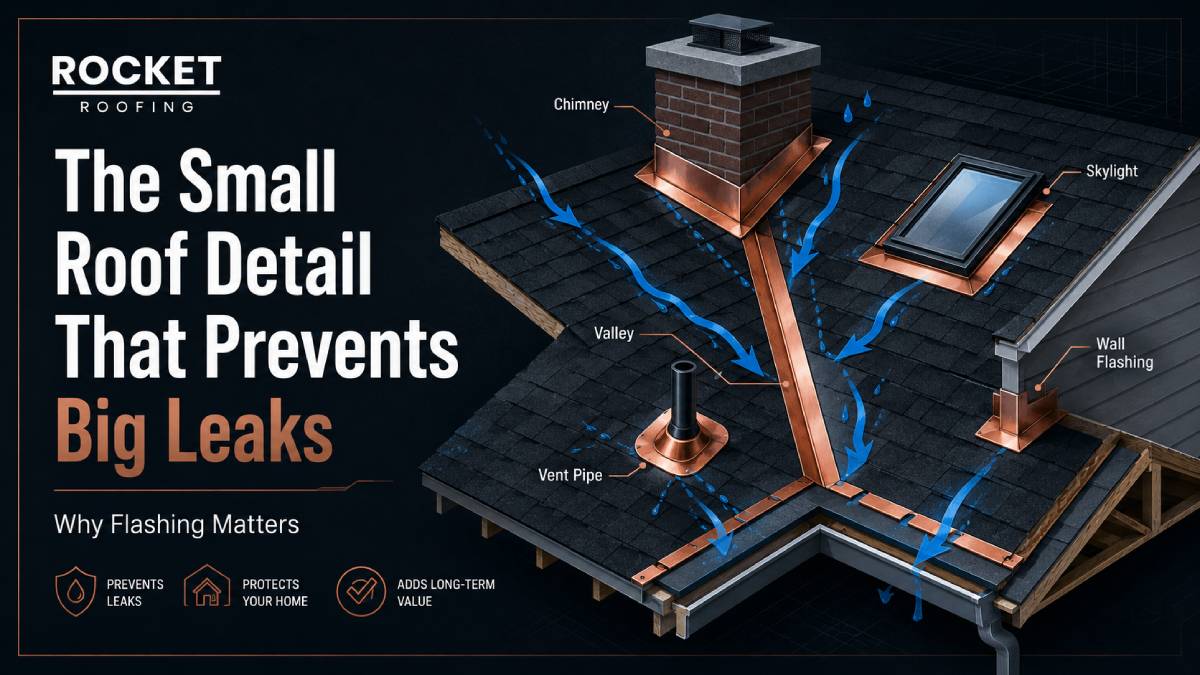
Flashing is the metal or waterproof material installed around roof transitions, edges, penetrations, and vulnerable areas where water could enter the home. It is commonly found around chimneys, skylights, vents, valleys, walls, roof edges, and other areas where the roof surface changes direction.
When flashing is installed correctly and maintained properly, it helps move water away from sensitive areas. When flashing fails, even a roof that looks good from the street can develop leaks.
Why Flashing Is So Important
A roof is not one flat, uninterrupted surface. It has openings, joints, angles, seams, and connection points. Every one of those areas needs extra protection because water naturally looks for the easiest path downward.
Flashing helps seal and redirect water at those vulnerable points. Without it, rainwater can work its way behind roofing materials and into the underlayment, decking, attic, walls, or ceiling.
In Southern California, flashing problems often go unnoticed during long dry periods. A small issue may sit quietly for months, then show up during the first major rainstorm.
Common Areas Where Flashing Problems Happen
Flashing issues can appear in several areas of a roof, including:
Chimneys
Chimney flashing is especially important because the roof surface meets a vertical wall. If the flashing is loose, rusted, poorly sealed, or incorrectly layered, water can slip behind it.
Skylights
Skylights add natural light, but they also create another roof penetration. Improper skylight flashing can lead to water stains, ceiling damage, and recurring leaks.
Roof Vents and Pipe Penetrations
Plumbing vents, exhaust vents, and other roof penetrations need watertight flashing. Over time, sealants can crack, rubber components can age, and metal flashing can shift.
Valleys
Roof valleys carry a high volume of water during storms. If valley flashing is damaged, clogged, or poorly installed, water may back up beneath the roofing material.
Wall-to-Roof Connections
Where a roof meets a wall, flashing must be layered correctly to move water away from the structure. This is a common leak source when flashing is missing, aged, or improperly installed.
Roof Edges
Drip edge and edge flashing help guide water into gutters and away from fascia boards, decking, and trim.
Warning Signs of Flashing Failure
Homeowners should watch for:
- Water stains on ceilings or walls
- Leaks near chimneys, skylights, or vents
- Rusted or bent metal flashing
- Cracked sealant around roof penetrations
- Loose or lifted flashing
- Missing flashing pieces
- Moldy or musty attic smells
- Peeling paint near rooflines
- Soft or damaged fascia
- Repeated leaks in the same area
A flashing problem does not always mean the entire roof needs to be replaced. In many cases, targeted roof repairs can fix the issue before the damage spreads.
Why DIY Sealant Is Not Always the Answer
It can be tempting to apply caulking or roofing sealant when a leak appears. While sealant may provide a short-term patch in some cases, it is not a substitute for proper flashing repair.
Flashing has to be layered correctly so water drains over the roofing materials instead of behind them. If the underlying flashing is damaged, misaligned, or missing, adding more sealant may only hide the problem temporarily.
A professional roof inspection can identify whether the issue is a simple sealant repair, damaged flashing, poor installation, roof material failure, or a larger roofing-system concern.
Southern California Weather Makes Flashing Maintenance Important
Southern California homes often experience long dry periods followed by sudden rain events. That pattern can expose roof weaknesses quickly. Flashing that looked “fine” during dry months may become the source of a leak when gutters fill, valleys carry heavy runoff, or wind-driven rain pushes water against roof transitions.
Homes with older roofs, tile roofs, skylights, chimneys, rooftop equipment, or multiple rooflines should pay extra attention to flashing details.
Flashing and Real Estate Transactions
Flashing issues can also become important during a home sale. A roof may appear serviceable overall, but an inspector may call out staining, patched areas, roof penetrations, or signs of prior water intrusion.
Having roof flashing reviewed before listing a property can help sellers address small issues early. For buyers, a roof inspection can provide a clearer understanding of whether visible staining or roof concerns are minor repairs or signs of a larger problem.
How Rocket Roofing Can Help
Rocket Roofing provides roof inspections, roof repairs, roof certifications, maintenance, and replacement services throughout Southern California. If you have a leak near a chimney, skylight, vent, wall connection, or roof valley, Rocket Roofing can inspect the roof and recommend the right repair.
The goal is simple: find the source of the problem, fix it correctly, and help prevent future water intrusion.
Do not wait for a small flashing issue to become a major interior leak. If you notice stains, dripping, cracked sealant, loose flashing, or recurring roof leaks, contact Rocket Roofing to schedule a professional roof inspection.
Owens Corning Roofing Products
Owens Corning Roofing Products
Rocket Roofing is proud to be selected as an Owen’s Corning Approved Roofing Contractor.
Owens Corning is a leader in roofing shingles, underlayment and components products. The look of a roof can have a significant impact on the overall design and perceived value of a home. After all, the roof can make up half of a home’s exterior.
Owens Corning systems look better, last longer and offer more choices to perfectly fit your project.
Rocket Roofing is proud to be selected as an Owen’s Corning Approved Roofing Contractor.
Owens Corning is a leader in roofing shingles, underlayment and components products. The look of a roof can have a significant impact on the overall design and perceived value of a home. After all, the roof can make up half of a home’s exterior.
Owens Corning systems look better, last longer and offer more choices to perfectly fit your project.