California homes and buildings are becoming more energy efficient, and that shift is changing how property owners think about roofing.
The 2025 California Energy Code, which took effect January 1, 2026, encourages energy-efficient heat pumps for home heating, cooling, and water heating. For certain commercial alterations, the code also addresses replacing end-of-life rooftop HVAC equipment with high-efficiency systems, including heat pumps. (California Energy Commission)
That makes the roof more important than many homeowners and property managers realize.
Your Roof Supports More Than Shingles
A roof is not just the surface material you see from the street. It is a complete system that includes decking, underlayment, ventilation, flashing, drainage, penetrations, gutters, and roof-mounted equipment.
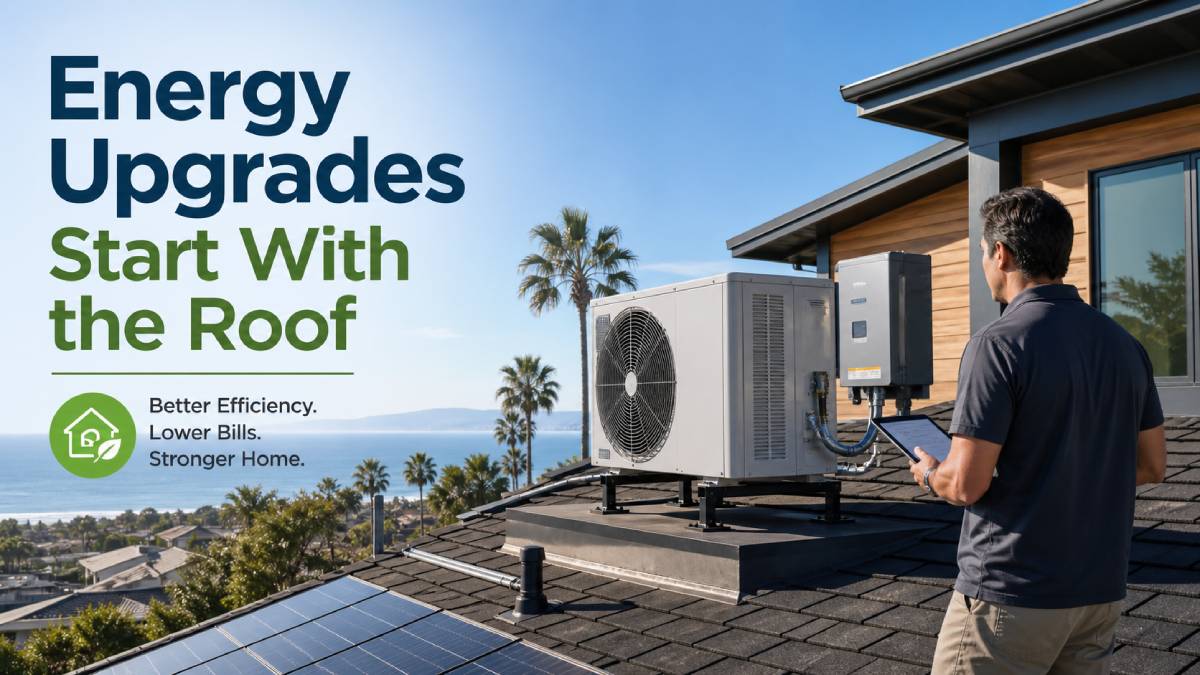
When energy upgrades are added to a home or building, the roof may need to support:
- New HVAC equipment
- Rooftop units
- Vent pipes
- Solar panels
- Battery-related electrical pathways
- Attic ventilation changes
- New penetrations for mechanical work
- Drainage adjustments
- Each of these can affect roof performance if not planned correctly.
Roof Penetrations Need Special Attention
Every time something passes through the roof, there is a potential water intrusion point. Vent pipes, electrical conduits, mechanical curbs, skylights, and the need for proper flashing and waterproofing.
This is especially important in Southern California, where long dry periods can hide a roofing issue until the next major rain. A small flashing weakness may not show up immediately, but when a storm arrives, water can find the gap quickly.
Before installing new equipment, property owners should ask whether the roof is in good enough condition to support the upgrade.
Do Not Put New Equipment on an Old Roof Without a Plan
One common mistake is installing solar panels, HVAC equipment, or other energy upgrades on a roof that may need replacement soon.
If the roof has only a few years of useful life remaining, the homeowner could end up paying to remove and reinstall equipment when the roof finally needs to be replaced. That can add cost and complexity to the project.
A roof inspection before an energy upgrade can help answer important questions:
- How old is the roof?
- Are there active leaks or weak areas?
- Is the underlayment still performing?
- Are flashings in good condition?
- Are there signs of ponding, drainage issues, or deterioration?
- Should roof replacement happen before equipment installation?
Commercial Roofs Need Even More Coordination
For commercial buildings, rooftop equipment is one of the most common sources of roof problems. HVAC units, curbs, service traffic, condensation lines, and drainage issues can all create stress on a low-slope roofing system.
As California pushes toward higher-efficiency buildings, commercial property owners should make roof review part of any mechanical upgrade. Replacing rooftop units without reviewing the roof membrane, flashing, drainage, and walkway protection can create avoidable problems.
Energy Efficiency Starts With the Building Envelope
A high-efficiency system works best when the building envelope is also performing well. The roof plays a major role in heat gain, attic temperature, ventilation, and moisture control.
The California Energy Commission notes that the 2025 Energy Code increases building envelope efficiency through improvements such as ceilings, exterior walls, windows, and related measures that help keep occupants more comfortable. (California Energy Commission)
That is why roofing should be part of the energy conversation—not an afterthought.
Final Thoughts
If you are planning solar, HVAC upgrades, heat pump installation, or other energy improvements, start with the roof.
A professional roof inspection can help you avoid installing new equipment over hidden damage, weak flashing, aging underlayment, or drainage problems.
Rocket Roofing helps Southern California homeowners and commercial property owners evaluate roof condition before major upgrades.
Before you invest in new rooftop equipment, call Rocket Roofing at (800) 720-0775 and make sure your roof is ready.
Owens Corning Roofing Products
Owens Corning Roofing Products
Rocket Roofing is proud to be selected as an Owen’s Corning Approved Roofing Contractor.
Owens Corning is a leader in roofing shingles, underlayment and components products. The look of a roof can have a significant impact on the overall design and perceived value of a home. After all, the roof can make up half of a home’s exterior.
Owens Corning systems look better, last longer and offer more choices to perfectly fit your project.
Rocket Roofing is proud to be selected as an Owen’s Corning Approved Roofing Contractor.
Owens Corning is a leader in roofing shingles, underlayment and components products. The look of a roof can have a significant impact on the overall design and perceived value of a home. After all, the roof can make up half of a home’s exterior.
Owens Corning systems look better, last longer and offer more choices to perfectly fit your project.