 Southern California’s unique climate and evolving environmental challenges make staying up to date with local building codes essential for any homeowner or property manager. In 2025, the California Building Standards Commission rolled out several significant updates to the roofing sections of the California Residential Code (CRC) and California Building Code (CBC). These changes reflect increased emphasis on wildfire mitigation, energy efficiency, and seismic safety. As a roofing contractor serving Riverside, Orange, and San Bernardino counties, Rocket Roofing wants you to understand how these updates could affect your next roof repair or replacement.
1. New Wildfire Mitigation Requirements
H2S Classification and Material Standards
In response to escalating wildfire risk, the 2025 CRC now classifies certain high-risk areas (notably foothill and inland valleys) as Wildland–Urban Interface (WUI) zones. Homes within designated WUI areas must use roofing materials that meet Class A fire-resistance ratings (for example, fiberglass-modified asphalt shingles, metal roofing with noncombustible underlayment, or clay and concrete tiles). Builders and reroofing contractors are required to verify the property’s WUI status before recommending or installing a new roof.
Ember-Resistant Underlayment
Another enhancement focuses on ember intrusion prevention. The updated code mandates installing an ember-resistant underlayment (ERU) beneath the primary roofing material in WUI zones. ERUs are engineered to resist penetration by wind-driven embers, a common ignition source during wildfires. For more details on ERU products and proper installation methods, consult manufacturer guidelines or speak with Rocket Roofing’s certified technicians.
Roof Vent and Soffit Protection
Vents, soffits, and eaves are vulnerable points where embers can enter the attic. The 2025 code now requires all roof vents to be approved “ignition-resistant” models—meaning they prevent flames or embers from entering ventilation openings. Soffit vents must be screened with corrosion-resistant wire mesh (maximum 1/16″ openings). If you live near foothills or brush-covered areas, ensuring proper attic ventilation products are critical for meeting these new standards and reducing wildfire vulnerability.
2. Revised Energy Efficiency (Title 24) Provisions
Cool Roof Requirements
California’s Title 24 energy standards are updated for 2025, tightening requirements for cool roofs in climate zones 8 and 16 (which include parts of San Bernardino County, Los Angeles County, and coastal Orange County). Homeowners replacing more than 50% of their roofs must select materials with a solar reflectance index (SRI) ≥ 78 for low-sloped roofs or ≥ 29 for steep-slope roofs. Common compliant options include white metal panels with factory-applied reflective coatings or light-colored composite shingles with high SRI values.
Insulation and Attic Ventilation Upgrades
Alongside roof coverings, the new code emphasizes attic thermal performance. If your existing insulation R-value falls below R-38, you may be required to add or upgrade to R-49 insulation—particularly in ceilings directly below conditioned attic spaces. Additionally, the code encourages balanced attic ventilation (minimum 1 sq ft of vent per 150 sq ft of attic). Rocket Roofing offers comprehensive energy audits to determine whether your attic ventilation and insulation meet 2025 requirements, ensuring both code compliance and lower utility bills.
3. Enhanced Seismic and Structural Standards
Uplift-Resistant Fastening
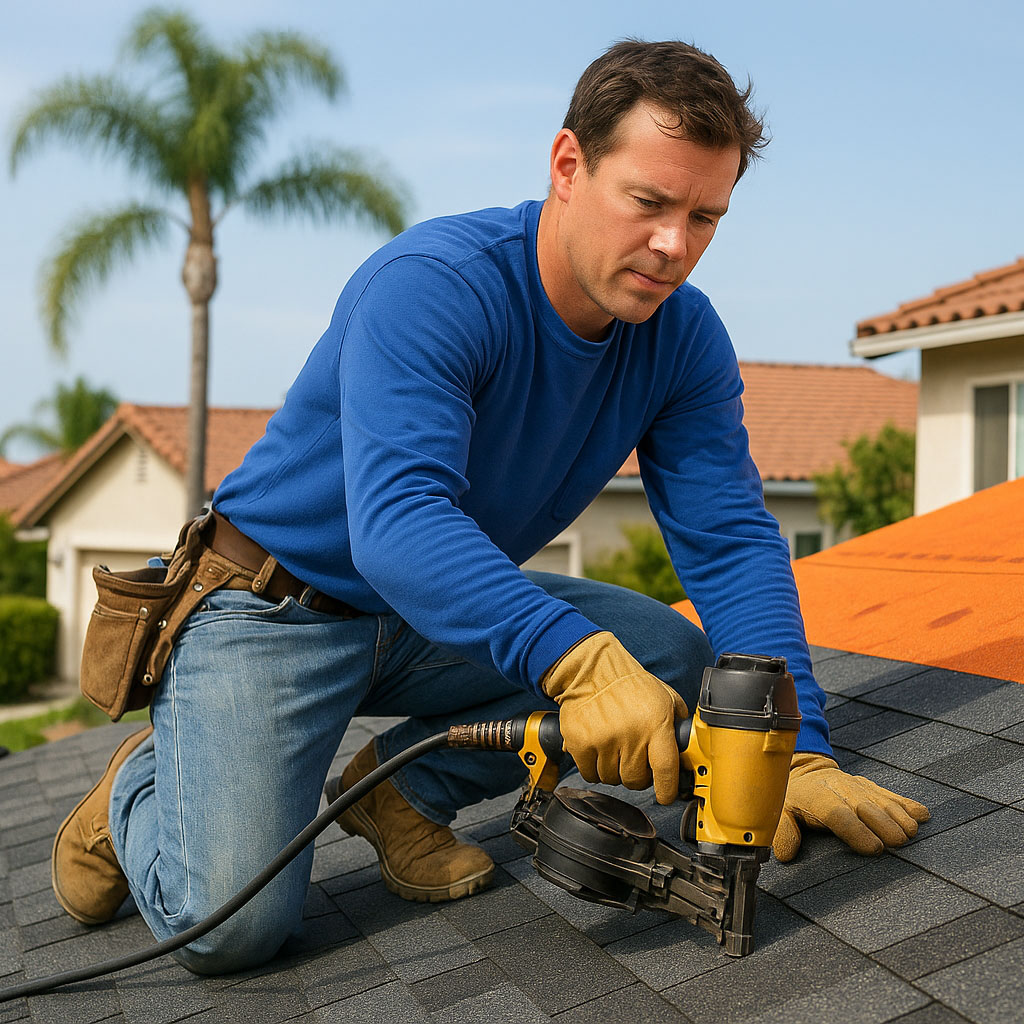
Seismic zones in Southern California place extra demand on roof attachments. The 2025 CBC clarifies fastening schedules for more robust seismic performance. For example, asphalt shingles in seismic design categories C, D, E, and F must be attached with corrosion-resistant nails or staples spaced no more than 6″ apart along the perimeter and 12″ in the field. Metal roofing panels require manufacturer-specific seismic-rated clips or fasteners. This ensures that rooftop components can withstand lateral and uplift forces during seismic events.
Structural Bracing Verification
Any reroofing project that exceeds 50% of the total roof area now triggers a “structural compliance inspection.” A licensed engineer or architect must verify that the roof’s framing and bracing meet minimum lateral load resistance standards. In practice, this often means adding hurricane ties, retrofitting ridge beams, or reinforcing rafters and trusses according to the 2025 CBC’s prescriptive tables. Rocket Roofing collaborates with structural engineers to streamline this process—minimizing delays and ensuring your project aligns seamlessly with code requirements.
4. Permit Streamlining and Documentation
Digital Plan Submittal
Several Southern California jurisdictions now accept—or even require—digital plan submittals for residential roof permits. In Riverside and Orange counties, homeowners can upload 3D roof layouts, specification sheets, and structural calculations via county permitting portals. This reduces review times and allows for real-time updates if additional documentation is needed. Rocket Roofing can prepare and submit these digital plans on your behalf, ensuring all drawings, material specs, and respirative ventilation calculations comply with the 2025 CRC/CBC.
Checklist for Homeowners
To expedite the permitting process, gather the following before contacting Rocket Roofing for a quote:
- Property address and parcel/APN number
- Existing roof framing plan (if re-roofing over 50%)
- Proposed roofing material specification sheets (Class A fire rating and SRI value)
- Attic insulation R-value documentation (if upgrading)
- Ember-resistant underlayment product data (for WUI properties)
- Ventilation product approvals (for ignition-resistant vents and screens)
Having these documents ready accelerates plan review and prevents last-minute revisions.
Conclusion and Next Steps
Navigating the 2025 Southern California roofing code updates might feel overwhelming, but staying proactive is key to protecting your home, maximizing energy savings, and ensuring long-term durability. At Rocket Roofing, our team is fully trained and certified in all current CRC/CBC requirements. From ember-resistant underlayment installation to digital plan submittals, we handle every technical detail—giving you peace of mind and a code-compliant roof that can withstand local environmental challenges.
Ready to schedule a free consultation? Contact Rocket Roofing today at (800) 720-0775 or visit rocketroofingca.com to request a permit-ready proposal. Let our experts guide you through the 2025 code updates and deliver a safe, efficient, and long-lasting roof for your Southern California home.
Owens Corning Roofing Products
Owens Corning Roofing Products
Rocket Roofing is proud to be selected as an Owen’s Corning Approved Roofing Contractor.
Owens Corning is a leader in roofing shingles, underlayment and components products. The look of a roof can have a significant impact on the overall design and perceived value of a home. After all, the roof can make up half of a home’s exterior.
Owens Corning systems look better, last longer and offer more choices to perfectly fit your project.
Rocket Roofing is proud to be selected as an Owen’s Corning Approved Roofing Contractor.
Owens Corning is a leader in roofing shingles, underlayment and components products. The look of a roof can have a significant impact on the overall design and perceived value of a home. After all, the roof can make up half of a home’s exterior.
Owens Corning systems look better, last longer and offer more choices to perfectly fit your project.